From Corrosion
to Certification.
80kV electrostatic application. TGIC polyester cure. Salt-spray tested to ASTM B117. Drag the divider to compare.
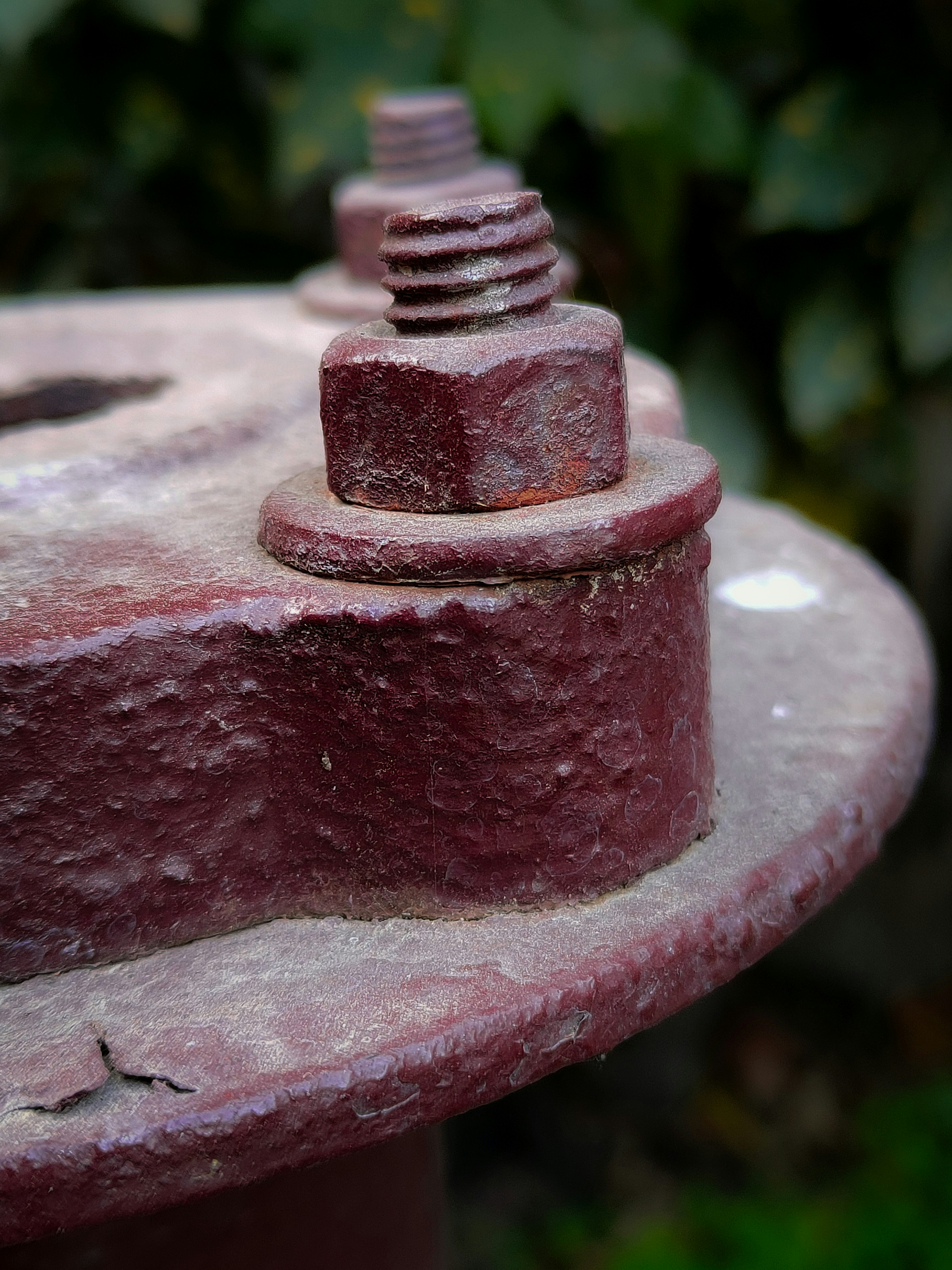
Active Corrosion
Pitting at bolt flanges, scale delamination, surface contamination
2.5 – 3.5 mil
TGIC Polyester · AAMA 2604 Compliant
ASTM B117 Salt Spray
No visible deterioration per D1654
Booth Charge
80 kV
Electrostatic
Cure Temp
400°F
20 min dwell
Blast Profile
Sa 2.5
ISO 8501-1
Film Tolerance
±0.3 mil
DFT verified
Surface Prep Specification Grid
Every part entering the booth has been verified against these parameters. Sortable by specification, method, or QC status. No part proceeds without a signed prep ticket.
Substrate Prep SOP · Rev 4.2 · Feb 2026
Abrasive Blast Profile | Sa 2.5 / 1.5–2.5 mil Rz | PASS |
Chemical Pretreatment Stage | 5-Stage Iron Phosphate | PASS |
Masking & Plugging | 100% thread/hole coverage | PASS |
Moisture Content | <0.5% surface moisture | PASS |
Outgassing Protocol | 15 min @ 450°F pre-bake | REQUIRED |
Substrate Temp at Application | 60–90°F (±5°F) | VERIFY |
Surface Cleanliness | SSPC-SP6 Commercial Blast | PASS |
All prep parameters logged per batch. Certification packet available upon request. Blast records retained 7 years per facility QMS-ISO 9001:2015.
Booth Conditions & Film Tolerances
Every application run is logged against these parameters. Excursions outside tolerance halt production and require supervisor sign-off before continuation.
Booth Voltage
Maintained via feedback control. Logged every 15 min.
Gun-to-Part Distance
Operator-verified at setup. Complex geometry: 6 in minimum.
Film Build Target
Elcometer 456 DFT gauge. Minimum 5 readings per part face.
Booth Temperature
Temperature excursions >±5°F trigger hold and review.
Booth Humidity
High RH causes orange peel and adhesion reduction. Logged continuously.
Cure Cycle
Part metal temperature (PMT) verified with Tempilaq. Oven profiled quarterly.
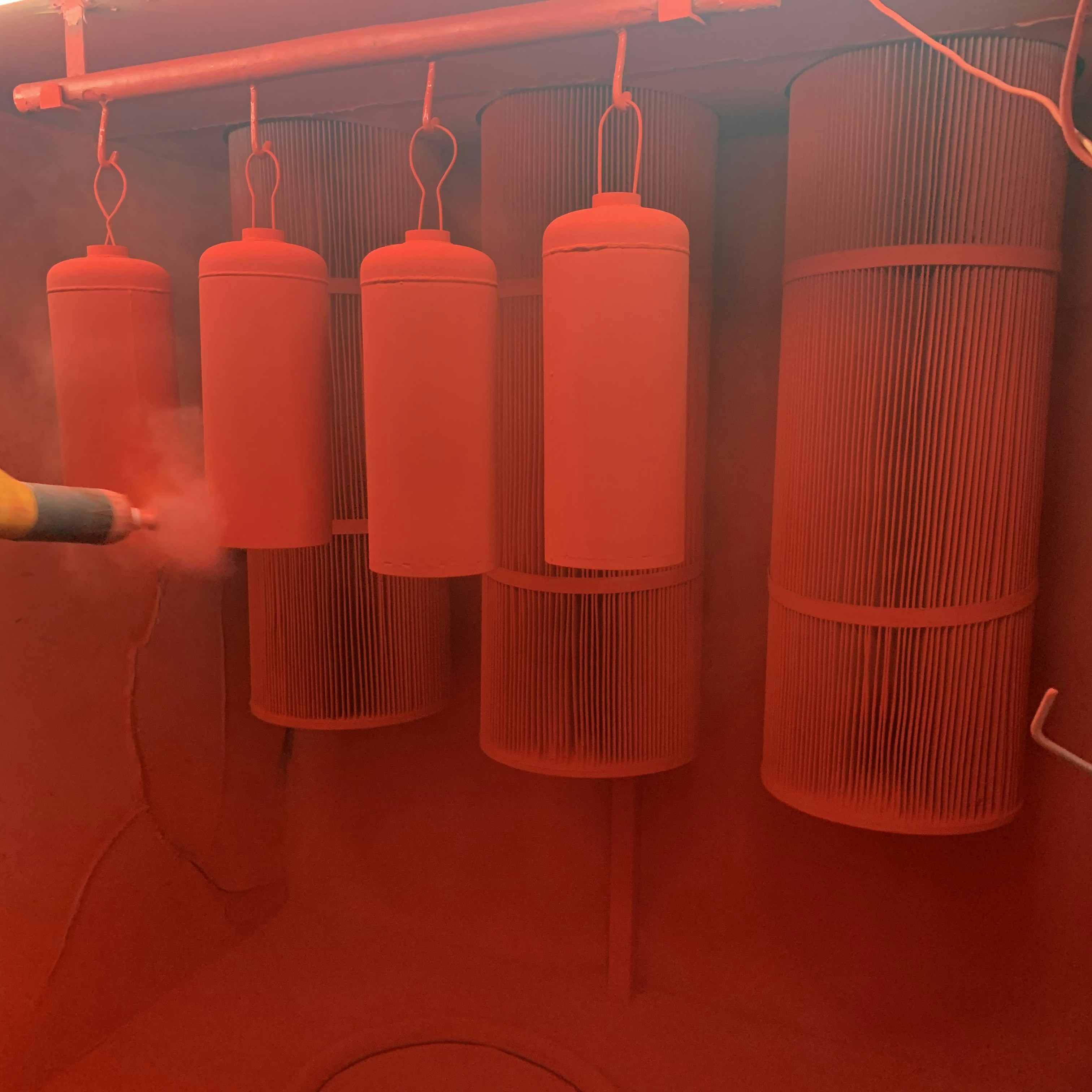
Application Booth — Bay 2
Nordson Sure Coat system · Faraday cage compensation active
Booth setup checklist, gun calibration log template, film build acceptance criteria. Rev 3.1 · Feb 2026
Mil-Spec Compliance
MIL-PRF-24712 · Exterior Use Classification · Polyester TGIC Type III. All application parameters meet or exceed military performance specification requirements.
Batch Certification Test Results
Live-format test dashboard. Every metric below is pulled from actual batch certification packets. Results reflect TGIC polyester on Sa 2.5 blasted carbon steel with iron phosphate pretreatment.
Cross-Hatch Adhesion
ASTM D3359 Method B
5B — Zero removal
Target: ≥4B
Tape pull at 1mm grid. Maximum rating achieved. Zero paint removal at cross-cut intersections.
Direct Impact Resistance
ASTM D2794
160 in-lb
Target: ≥80 in-lb
Gardner impact, 2× minimum spec. No cracking, cratering, or delamination at impact site.
Salt Spray — No Scribe
ASTM B117
4,000+ hrs
Target: 3,000 hrs (AAMA 2604)
Continuous 5% NaCl fog. Evaluated per ASTM D714 blistering and D1654 creep from scribe.
Pencil Hardness
ASTM D3363
H — No scratch
Target: ≥F
Film hardness measured with calibrated pencil set. Uniform hardness across panel face.
Gloss Retention @ 60°
ASTM D523 / D4214
≥70% at 5 yr equiv.
Target: ≥50% (AAMA 2604)
Measured with BYK micro-TRI-gloss meter. Specimens weathered per ASTM G154 QUV-A cycle.
UV Weathering — QUV-A
ASTM G154 Cycle A
3,000 hrs — ΔE <2.0
Target: ΔE <5.0
Color shift measured per CIE L*a*b*. No chalking, blistering, or loss of adhesion at 3,000 hrs.
Sample Batch Certification Packet
Includes all test results, equipment calibration records, and operator sign-off. Actual document format delivered with every order.
Powder Chemistry Selection Guide
Compare TGIC polyester, urethane, and epoxy-hybrid by performance metric. Amber cells indicate best-in-class for that row. Use this to pre-qualify your chemistry before requesting the full spec guide.
| Performance Metric | TGIC Polyester | Urethane | Epoxy-Hybrid |
|---|---|---|---|
UV / Outdoor Durability | Excellent 10-yr AAMA 2604 | Excellent Comparable to TGIC | Poor Chalks within months |
Corrosion Resistance | Very Good 4,000+ hrs B117 | Excellent Superior at thin film | Outstanding Best of all powders (interior) |
Film Thickness Tolerance | Forgiving 1–5+ mil, low sensitivity | Moderate >4 mil: outgas risk | Good Primer use recommended |
Chemical Resistance | Good Suitable for industrial env. | Very Good Acids, alkalis, solvents | Outstanding Best chemical barrier |
Impact / Flexibility | Excellent 160+ in-lb direct | Good Smooth finish priority | Very Good High hardness + adhesion |
Cure Temperature | Low (375°F PMT) Cast/extruded parts OK | Moderate (390°F) Odor during cure | Flexible range Wide cure window |
Dielectric / Electrical | Suitable Enclosures, switchgear | Good Verify per application | Excellent Preferred for HV isolation |
Recommended Use | Outdoor switchgear, curtain wall, transformer enclosures Primary energy sector spec | Demanding outdoor, architectural premium Higher cost | Interior, primer coat, HV enclosures Avoid direct UV |
All chemistry data sourced from manufacturer TDS, AAMA specification documents, and in-house test data. Download the full spec guide for substrate-specific recommendations.
Energy Coatings
Spec Guide.
48 pages of substrate-specific chemistry guidance, ASTM test data tables, AAMA 2604 compliance checklists, and a recoat-vs-replace decision flowchart written for plant engineers — not marketing teams.
"We used the CoatSpec chemistry matrix to finalize our TGIC spec for 240 outdoor switchgear enclosures. The test data answered every question our procurement team had before the first RFQ."
David Morrow
Senior Procurement Engineer · Gulf States Utilities
Download the Energy Coatings Spec Guide
3 fields · instant delivery · no follow-up unless requested
Updated February 2026 · Includes AAMA 2604 rev. and MIL-PRF-24712 classification table